Capsaicin
CFTR potentiator
General information
Capsaicin is an active component of chili peppers. It is used as an analgesic in topical ointments and dermal patches to relieve pain and to reduce the symptoms of peripheral neuropathy. It is FDA-approved and sold under the name Qutenza® since 2009. In relation to cystic fibrosis, our AIM tool found the data that capsaicin can potentiate cAMP-stimulated G551D-CFTR, F508del-CFTR, and 8SA-CFTR channels.
Capsaicin on PubChem
Capsaicin on DrugBank
Capsaicin on Wikipedia
Synonyms
N/A
Marketed as
Dietary sources
chilli peppers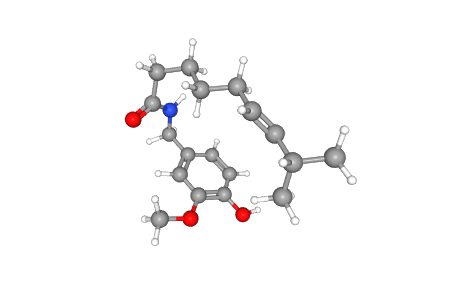
C18H27NO3
Drug-Mutation Relation
Treats
| Mutation | Number of sources | Average impact factor | ||||||||
|---|---|---|---|---|---|---|---|---|---|---|
|
8SA
|
1 | 5.08 | ||||||||
|
||||||||||
|
F508del
|
1 | 5.08 | ||||||||
|
||||||||||
|
G551D
|
1 | 5.08 | ||||||||
|
||||||||||
Does not treat
| Mutation | Number of sources | Average impact factor |
|---|